We are building a sustain, accessible and secure digital mail service in Finland. The more digital mail is delivered and received, the greater the positive impact is for the environment, climate and consumer’s everyday life.
We are building a sustain, accessible and secure digital mail service in Finland. The more digital mail is delivered and received, the greater the positive impact is for the environment, climate and consumer’s everyday life.


Through active dialogue with societal stakeholders, we promote people’s rights to receive their mail securely and quickly as digital mail in the channel of their choice, without long processing steps and environmentally burdensome logistics.

We value individuals’ rights to their own digital identity and data. We do not sell or transfer Kivra users’ data to third parties. The service user owns all the documents stored in the service and the data trail generated from using the service.

We develop our service in accordance with principles of equality and accessibility. Every person over 15 years old with Finnish bank credentials has the opportunity to use our service for free in Finnish, Swedish, and English.
Kivra’s mobile application was audited for accessibility by a third party in June 2021. The mobile application meets the AA level of the Accessibility Directive (WCAG 2.1).

For the third year, we support children’s and youth’s floorball activities through Salibandyn Tuki Ry. Youth inactivity is a growing problem in our society, and we want to do our part to enable youth to be active. We donate €0.50 from each F-Liiga ticket delivered via Kivra to Salibandyn Tuki Ry to be distributed to floorball clubs to support young people in need.

Digital services must adapt to societal needs. As the population ages, digital services should also be usable together. We want to enable our service to be used collaboratively with family or friends. In Kivra, users can share folders with chosen individuals and manage bills or other documents together.

Building sustainable and responsible digital mail in Finland requires open cooperation between private and public sector actors. For us, neutrality and fair partnership are prerequisites for our business.
We base our business model on a transparent ecosystem and open cooperation between different actors. The collaboration must be structured so that every party has the opportunity to succeed and receive their share of the value chain.
We call this operating model ‘Happy-Happy’.
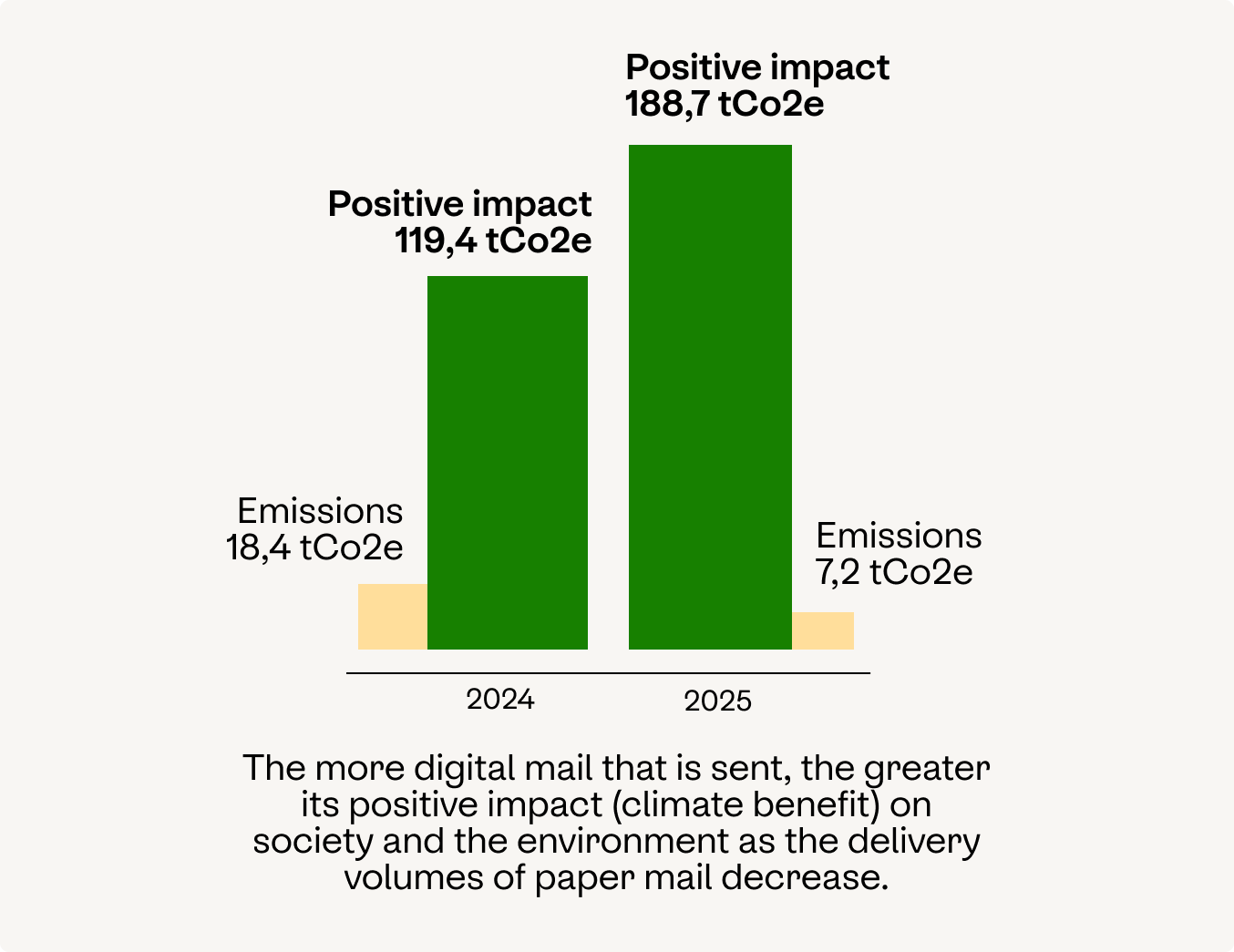
According to the 2025 calculations, Kivra’s carbon footprint is 7.2 tCO2e. Kivra’s relative carbon footprint has decreased significantly from the previous year, as emissions decreased while the positive climate impact continued to grow.
The delivery volumes of digital mail have increased even more during the year. Kivra’s total carbon footprint will likely increase in the future as Kivra grows as a company and as Kivra’s staff increases. The more digital mail Kivra delivers to consumers, the greater its positive environmental impact, and relatively, Kivra’s carbon footprint as a company will decrease. Kivra’s business generates a positive climate impact as it grows by reducing the felling of trees for paper production, mail distribution from traffic, and handling of paper mail.
Kivra’s carbon handprint was 188.7 tCO2e during 2025, as Kivra reduced carbon dioxide emissions from paper mail deliveries by this amount. During 2024, the carbon handprint was 119.4 tCO2e.
Digital mail — The carbon footprint of one Kivra digital mail delivery in 2025 = 2.7 g CO2e
Paper letter — The carbon footprint of one paper letter delivery is on average 74.5 g CO2e
Reporting the emission impacts of fund investments of employment pension insurance premiums as part of the company’s carbon footprint falls under the Scope 3 category for investments and is a voluntary emission category. In the figures presented on our website, the carbon footprint impacts of TyEL (employment pension) fund investments have been left out to ensure the best possible comparability. In Finland, currently only a few companies include the carbon footprint impacts of employment pension companies’ investments in their own carbon footprint calculations.
Considering the investments, Kivra’s carbon footprint is 11.8 tCO2e.
We have calculated and analyzed our carbon footprint since Kivra Finland was established. Kivra’s total operational emissions are very low, but we continuously strive to reduce them further while increasing our positive impact on society by growing the use of digital mail in Finland.
Kivra’s carbon footprint has been calculated in accordance with the Greenhouse Gas Protocol, covering Scope 1, 2, and 3 emissions. The calculation includes 6 out of 15 Scope 3 categories, selected based on their relevance and data availability.
It should be noted that emissions are also generated from other sources not included in this calculation. However, these excluded emissions are estimated to be minor in terms of the overall impact.
The calculations have been carried out in collaboration with NGS Finland, a company specialized in carbon accounting and climate consulting.
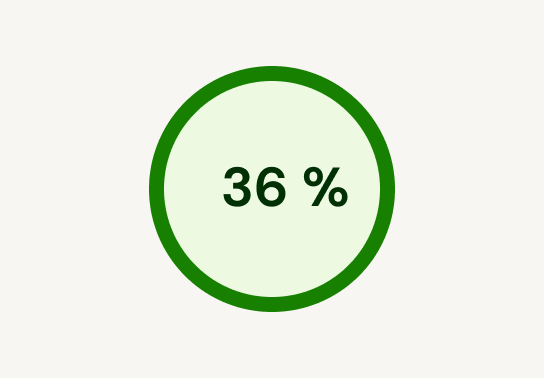
The share of on-site work increased slightly during 2025 compared to the previous year. We encourage the use of low-emission modes of transport for commuting and offer our employees the opportunity to work in a hybrid model, in a way that best suits each role. Employees’ travel between home and the workplace is counted as indirect emissions for the company. The emissions impact of remote work, in turn, results from the shift in energy consumption from office spaces to employees’ homes.
The data has been collected from each employee on a quarterly basis. Respondents reported the length of their commute, their primary mode of transport, the frequency of travel, and the amount of remote work. In total, commuting emissions for the year amounted to 2.6 t CO2e.
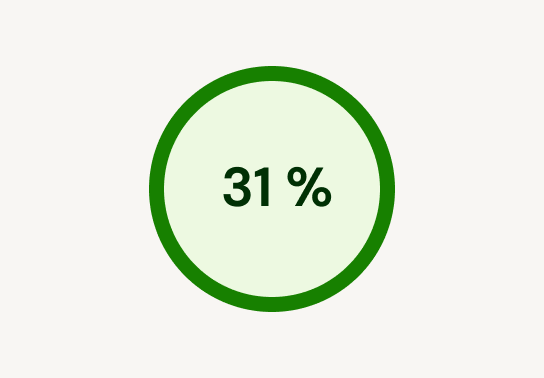
Business travel accounts for approximately one third of Kivra’s annual emissions. Emissions from business travel arise from work-related travel by air, ferry, bus, train, or employees’ own cars, as well as from accommodation related to these trips. In total, these emissions amount to only 2.2 t CO2e. We aim to keep business travel by air or car to a minimum also in the future.
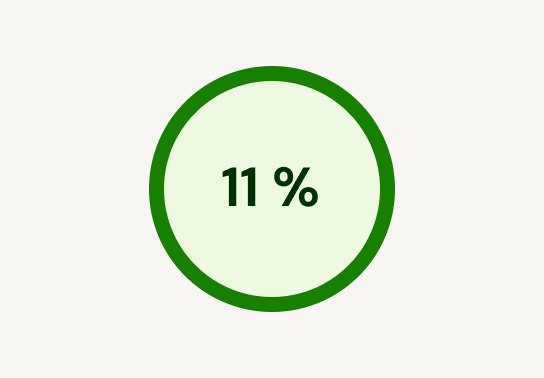
Emissions from Kivra’s purchased goods and services, such as production raw materials, packaging materials, and services like marketing or IT services, are classified as other indirect emissions. Delivering Kivra’s service requires data transfer and server capacity, IT equipment, and marketing materials. However, the total emissions were very small, amounting to only 0.8 t CO2e for the entire year.
Our staff, or Kivra employees, are the cornerstone of our entire business. Without a well-being and motivated group of Kivra employees, we would not be able to produce and develop sustainable and secure digital mail in Finland. Our shared values and our desire to build a sustainable society guide our collective efforts every day of the year.

We support the development of our staff in their areas of expertise by enabling skill enhancement in a personalized manner, taking into account individual needs and circumstances.

We provide the keys to maintaining well-being and achieving work-life balance through various means such as sports and cultural benefits, comprehensive occupational health services, a hybrid work model, flexible working hours, and ergonomic and high-quality work tools.

Good leadership and our company culture promote equality and openness. At Kivra, nobody is discriminated against, and everyone should be able to express themselves freely. We base our approach on open communication and addressing issues when necessary.

We assess our staff’s workload and motivation four times a year through work capacity surveys. These surveys help us ensure the well-being of our staff, maintain motivation, and improve the quality of leadership.

In Kivra, recruitment involves not only the hiring manager but also team members and possibly other stakeholders. This ensures an equal and competence-based recruitment culture.

We adhere to good governance by using our shareholders’ investment assets responsibly. We promote a fair and encouraging leadership culture. We comply with laws, regulations, and reporting models.


